
What Street Performing Taught Me About Holding a Corporate Audience's Attention
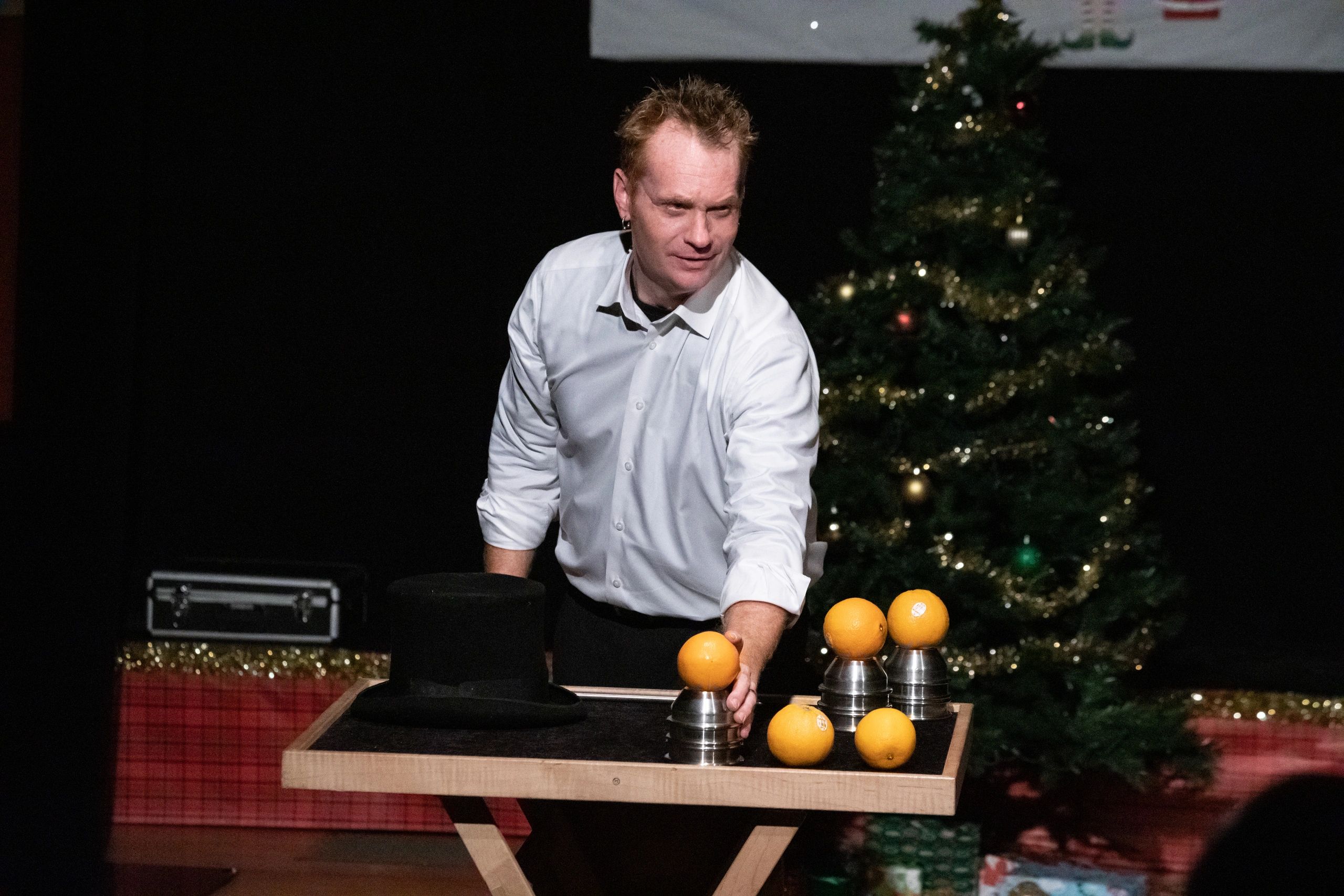
What does performing for strangers on a sidewalk teach you about entertaining a ballroom full of corporate guests? More than you might think.
Every year, thousands of corporate events follow a familiar pattern: a nice venue, a catered dinner, some form of entertainment, maybe a speaker. And most of them are fine. Genuinely fine. Attendees have a decent time, the evening wraps up, and by Monday morning it's already fading.
I'm Kristian Charles, a professional magician based in Cincinnati, Ohio, and I've spent the past decade performing at corporate events of all sizes. The thing I hear most often afterward isn't about any particular moment in the show — it's that people are still talking about it the next day. That's what I'm going for.
Magic as a shared social experience
Think about the last work event you actually remember. Chances are it wasn't the food or the venue — it was a moment that caught you off guard. Something that made you turn to the person next to you and say, 'Did you just see that?' Those moments don't happen by accident, and they're harder to engineer than most people think.
Magic creates that kind of moment reliably. Whether you're hosting a client appreciation dinner, an annual awards ceremony, or a company holiday party, there's something about genuine surprise that pulls people out of their own heads and into the room. It's one of the few things that works on a crowd of strangers and a room full of colleagues equally well.
I've seen it happen at events where the room started out quiet and a little stiff — the kind of gathering where people are polite but not quite present. A few minutes of close-up magic at the right table, and the energy shifts. People lean in. They start talking. That's the part I find most satisfying about this work.
How strolling and stage magic fit different event formats
One of the things I appreciate most about what I do is how well it fits into different parts of an event. I'm not locked into a single format, and neither are you.
During a cocktail reception or networking hour, I work the room — moving table to table, performing close-up magic for small groups. It's conversational and personal, and it gives people a natural reason to engage with each other and with me. For a seated program — an awards dinner, a product launch, an executive retreat — I can anchor the evening with a stage show that gives the whole event a memorable focal point.
The format I'd recommend depends entirely on what you're trying to accomplish. A client appreciation event has different goals than a company holiday party, which has different goals than a product launch. I customize every performance around the event, the audience, and what you actually want people to walk away feeling. If you're curious about what that process looks like, I've written more about it here.
Why magic works across a diverse corporate audience
Corporate events bring together people who might not have much in common beyond the company they work for. Different roles, different backgrounds, different senses of humor. Finding entertainment that genuinely lands with all of them — not just the most outgoing people in the room — is a real challenge.
Magic has an unusual advantage here. It doesn't depend on shared cultural references, a particular sense of humor, or even a shared language. Surprise and wonder are pretty universal. In my experience, that makes it one of the more reliably inclusive options for a mixed corporate audience — from the CEO to the newest hire, from the client who flew in from overseas to the vendor who's been working with the company for years.
If you're planning a corporate event and want to create something your guests will remember long after the evening ends, I'd love to hear what you have in mind. Let's talk about your event and see what we can create together.
The corporate holiday party can be a wonderful opportunity to celebrate the people who make a company successful. But without a little thought and planning, even the nicest venue, a great meal, and a room full of good people can result in an evening that feels surprisingly ordinary.
It doesn't have to be that way. As a professional magician who has performed at corporate holiday events across Cincinnati and beyond, I've watched what works and what doesn't. Here are five things that can help transform a forgettable holiday party into something people actually look forward to.
Anchor the evening with something that pulls people into the room
Music, food, and an open bar are table stakes. They're expected, and they're appreciated — but they don't give people a reason to look up from their phones. The most effective anchor for a holiday party is something interactive: an experience that invites people to be present rather than just in attendance.
Close-up magic works particularly well in this role. When I'm performing at a holiday party, I'm moving through the room and creating small, surprising moments right in front of people — effects that happen in their hands, with objects they've just examined. The reaction isn't polite applause. It's genuine surprise, followed by laughter, followed by someone turning to the person next to them and saying "did you just see that?" That's the moment a party starts to feel like a party. I've written more about why magic works so well as corporate entertainment if you'd like to dig into the details.
I've performed at holiday events ranging from intimate gatherings of around thirty people to company-wide celebrations of three hundred. The approach changes depending on the size of the gathering, but my goal remains the same: to create moments that bring people together.
Structure the night in acts, not one long block
Most parties are structured as a single long block of time with no shape. People arrive, mill around, eat, and leave. The evening has no momentum because it was never designed to have any.
Instead, think in acts. A cocktail hour with roaming close-up magic. A seated dinner with a focal stage performance. A post-dinner social period with music. Each transition gives people a reason to re-engage — to look up, reset, and reconnect with whoever is nearby.
One thing I enjoy about holiday party work is that the format is flexible enough to use both sides of what I do. During cocktail hour, I move through the room doing close-up magic — it's personal, it breaks the ice, and it works in small groups without requiring everyone to stop what they're doing. If the client wants a stage component, I can shift into a more theatrical show during or after dinner. The two formats complement each other rather than compete.
You don't need to fill every minute. You need to give the evening a shape — a beginning, a middle, and an end that people can feel.
Personalize at least one moment for your specific team
Personalization doesn't have to be elaborate. A custom cocktail named after a company milestone. A slideshow of team photos from the year. A performer who takes the time to understand who's in the room before walking into it.
Before any corporate event, I have a conversation with the organizer about the company — what they've accomplished this year, who the key people are, what the team's culture is like. That understanding shapes how I approach the performance: the tone I use, the moments I choose to build on, the way I read the room as the evening unfolds. It's not that every effect is custom-built from scratch — it's that the performance is informed by the people I'm performing for. If you'd like to learn a little more about me and how I work, my about page has more.
Personalization signals that someone actually thought about the people in the room. That's rarer than it should be at corporate events, which is exactly why it lands so well when it happens.
Give people a story to take home, not a swag bag
The best party favor is a story. "You won't believe what happened at the holiday party this year" is worth more than any branded pen or tote bag.
Think about what you want people to say on Monday morning. If the answer is "it was fine," you've planned a fine party. If the answer is "I still can't figure out how he did that," you've planned something worth remembering.
The moments I aim for aren't the ones where people applaud — they're the ones where someone turns to the person next to them with their mouth open. That reaction is the story they'll tell. It doesn't require a large budget or a famous name. It requires the right kind of moment, designed with intention.
End with intention — people remember the finale
Plan a finale. A closing performance, a toast, a moment that signals the evening is complete. People remember beginnings and endings most vividly — the middle tends to take care of itself if the bookends are strong.
A party that simply winds down until the last few people drift out doesn't leave anyone with a strong final impression. A party that ends with something — a moment, a laugh, a shared experience — sends people home with that feeling still on them.
When I'm the closing act at a holiday party, I think of it as the last thing people will carry with them when they walk out the door. The finale isn't just the last effect — it's the punctuation on the whole evening. Corporate holiday parties are genuinely some of my favorite events to perform, and a lot of that comes down to the energy in the room when a whole company is together.
If you're planning a company holiday party and want to give your guests something they'll still be talking about long after the evening ends, I'd love to hear what you have in mind. Let's talk about your celebration and see what we can create together.
People often assume that a magic show is a magic show — that a performer shows up with a bag of tricks and runs through the same routine they've done a thousand times. For some performers, that might be true. For me, it's never been how I work. Every corporate show I perform is tailored to the company, the audience, and the occasion. That process begins well before anyone walks into the room.
It starts with understanding your event
Before I start thinking about what I'm going to perform, I want to understand what you're trying to accomplish. Every corporate event has a purpose — a product launch, an annual celebration, a team milestone, a client appreciation evening. The entertainment should serve that purpose, not just fill time between dinner and dessert.
So I ask questions. What does the company do? What are they celebrating? What's the culture like — formal and polished, or relaxed and a little irreverent? Who will be in the room, and what's the mix? Are there longtime employees sitting next to people who started last month? Is the executive team in the audience, or is this a team-only event? The answers to those questions shape everything that comes after.
I also want to understand the event schedule. Where does the entertainment fit in the evening? Is there a dinner, a program, a speaker? Knowing the flow helps me think about pacing — when to bring energy up, when to let a moment breathe, and how to leave the room in the right place for whatever comes next.
Building the show around the occasion
Once I have that picture, I start building. Not selecting routines from a catalog, but tailoring the performance — the presentation, the pacing, the audience interaction, and the overall experience — to fit the specific event.
When it's appropriate, I'll incorporate elements that connect to the company's story. A significant milestone or achievement might find its way into the show. A moment designed to bring together longtime employees and newer faces might be woven into the structure. These aren't guaranteed elements of every performance — they depend on what the event calls for and what the organizer shares with me. But when they fit, they make the show feel genuinely personal rather than generically entertaining.
I also think carefully about the arc of the show. A stage performance isn't just a sequence of effects — it's an emotional journey. There are moments designed to draw people in, moments that build to genuine surprise, shifts in energy that keep the room engaged, and an ending that leaves people with something to carry into the rest of the evening. Getting that arc right is as important as any individual piece within it. If you're curious about why corporate magic works so well as event entertainment, I've written about that in more detail elsewhere on the blog.
Strolling magic, stage performance, or both
One of the first practical questions I ask is about the event format — because the format determines what kind of performance makes sense.
For cocktail hours, receptions, and networking events, strolling magic is often the right fit. I move through the room, working with small groups, creating moments right in front of people — effects that happen in their hands, with objects they've just examined. The reaction is immediate and personal. It gives people something to talk about with each other, which is exactly what you want during a reception.
For general sessions, awards dinners, or seated events, a stage performance works differently. The energy is broader, the pacing is different, and the moments are designed to land with a full room at once rather than one group at a time.
Some events call for both — a strolling set during the reception followed by a stage performance after dinner. When that's the case, I plan how those two experiences complement each other, so the evening has a coherent feel from start to finish rather than two separate entertainment segments that happen to feature the same performer. If you're thinking through what might work best for your event, the piece I wrote on making a corporate holiday party memorable touches on how different entertainment formats serve different moments in an evening.
Rehearsal is where the real work happens
Once the show is shaped, the rehearsal process begins. I run each piece many times — not just for technical precision, but for timing, pacing, and feel. Magic lives and dies in the details. A half-second of hesitation in the wrong place can break the illusion. A well-placed pause can make it ten times more powerful.
I also rehearse the unexpected. What happens if a volunteer doesn't cooperate? What if the room is louder than expected? What if the lighting or sightlines are different from what I planned for? I've performed in hotel ballrooms, warehouse spaces, rooftop venues, and everything in between. Adaptability isn't a bonus — it's a requirement.
There's something interesting that happens when a performance is thoroughly rehearsed: it creates freedom. When the technical foundation is solid, I'm not managing the mechanics — I'm reading the room, responding to the audience, and finding the moments that make a live performance feel genuinely alive. The preparation is what makes the spontaneity possible.
The day of the show
The day of the event, I arrive early. I walk the space, check the sightlines, confirm the technical setup, and talk to the event staff. By the time the first guest walks in, I've already taken the time to make sure everything is ready.
That preparation is invisible to the audience — which is exactly the point. What people experience as a seamless, spontaneous performance is the result of weeks of work they'll never see. That's the craft. And it's why no two shows are ever quite the same.
If you're planning a corporate event, I'd love to hear what you have in mind. Every audience is different, and that's part of what makes this work so enjoyable. Let's talk about your event and see what we can create together.
Walk through just about any trade show and you'll see hundreds of companies trying to accomplish the same thing: get someone to stop, pay attention, and start a conversation. Some have elaborate displays. Others have impressive giveaways. And almost everyone is hoping their booth will be the one people remember.
That's where I believe a little magic can make a big difference.
The trade show floor is a competition for attention
Most exhibitors at a trade show are working hard. The displays are professional, the messaging is polished, and the staff is ready to talk. The challenge isn't effort — it's differentiation. When every booth is doing roughly the same thing, it becomes difficult for any one of them to stand out.
That's not a criticism of traditional trade show strategy. Banner stands and branded giveaways serve a purpose. But they're passive. They wait for someone to notice them. Magic is different. It gives people a reason to stop, pay attention, and see what's happening.
Why magic works in a booth environment
Close-up magic is particularly well suited to trade show settings because it works at human scale. There's no stage, no distance, no barrier between the performer and the audience. Something impossible happens right in front of someone — in their hands, inches from their face — and they react.
That reaction is the key. Magic is inherently social. When one person is surprised, the people nearby want to know what just happened. A small interaction draws curious onlookers. The energy around the booth changes. It becomes a place where something is happening, rather than a place where something is on display.
One of the things I enjoy most about performing at trade shows is watching curiosity take over. Someone stops to see what's happening, another person notices their reaction, and suddenly there's an opportunity for an interaction that might never have happened otherwise.
Turning attention into meaningful conversations
I've performed at trade shows for companies in healthcare, financial services, and manufacturing, and the dynamic I've seen consistently is this: after a piece of close-up magic, people are relaxed, curious, and in a genuinely good mood. That's a different starting point for a conversation than a cold approach at a booth.
My role is to attract visitors and help your team get those conversations started. I'm not replacing your sales representatives — I'm creating openings for them. Whether those conversations turn into qualified leads depends on your team, your product, and your follow-up process. That part is yours.
The distinction matters, and I think it's worth being honest about it. Engagement and qualified leads are not automatically the same thing. What I can reliably contribute is attention, a positive first impression, and a natural moment for your team to step in. That's a real contribution — it's just not the whole sales cycle.
Making your company's message part of the experience
One thing I do regularly at trade shows is incorporate the exhibitor's messaging into the performance itself. If your company has a tagline, a product name, or a key differentiator you want attendees to remember, I can work it into what I'm doing in a way that feels natural rather than forced.
I've done this for companies across a range of industries — healthcare, financial services, manufacturing — and the goal is always the same: the audience remembers the experience, and the experience is connected to your brand. It's not a commercial. It's something they actually enjoyed, that happened to leave your message with them.
The specifics depend on what you're trying to communicate and how your booth is set up. I don't offer a one-size-fits-all branded trick — the approach is shaped by the conversation we have before the show. If you're curious about what that might look like for your company, that's exactly the kind of thing worth discussing early.
What to think about before booking
If you're considering adding a magician to your trade show presence, a few practical things are worth thinking through. First, what do you actually want to accomplish? Attracting foot traffic, creating a more relaxed atmosphere, giving attendees something to remember — these are all achievable goals. Being clear about the goal helps shape how the entertainment fits into the booth.
Second, how does your booth flow work? Close-up magic creates natural pauses — moments where a performance ends and a conversation can begin. If your team is ready to engage the people who stop, those moments are valuable. If the booth isn't set up for that kind of handoff, some of the value gets lost.
Timing and scheduling matter too. Trade show floors have rhythms — busy periods, slower stretches, peak hours that vary by show and industry. Building the performance schedule around those rhythms makes a difference.
If you're planning an upcoming trade show, I'd love to hear what you're working on. Tell me a little about your company, what you're hoping to accomplish, and what you want people to remember when they leave your booth. Let's talk about your trade show and see what we can create together.
One of the things I've always loved about being a magician is that you never really know where it's going to take you or who you're going to meet along the way.
I've performed at all kinds of events over the years, and I've met people from just about every walk of life. Some of those encounters last only a few minutes. Others turn into repeat performances, lasting relationships, and occasionally, genuine friendships.
And sometimes, you don't realize the significance of a particular performance until years later.
One of my favorite examples started at a trade show.
It All Started With a Trade Show
Years ago, I was hired to perform magic for a company exhibiting at a trade show.
If you've ever attended a trade show, you know how busy they can be. There are people everywhere, companies competing for attention, and conversations happening in every direction.
My job was to entertain people, create a little excitement, and help the company connect with the people visiting its booth.
At the time, it was simply another opportunity to do something I love.
What I didn't realize was that this particular engagement would lead to a relationship that would continue long after the trade show was over.
As best I remember, a woman who worked for the company recommended me to perform at a private party.
Her husband happened to be a senior executive at Sony Music.
Now, that's certainly an interesting connection to make while performing magic at a trade show. But as it turned out, his professional title would become one of the least important things about our relationship.
From One Performance to Many
That introduction eventually led to numerous Kentucky Derby parties and several other private events.
And if you've ever been to a Kentucky Derby party, you know there's usually no shortage of excitement, conversation, or interesting hats.
Over time, I had the pleasure of returning to perform for him on multiple occasions.
As a professional entertainer, there's something especially rewarding about being invited back. It tells me that people enjoyed the experience enough to want to share it again.
But what I remember most about those events isn't a particular trick or even the opportunity to perform for someone with an impressive career.
It's the person I got to know along the way.
The Person Behind the Position
When people hear that someone held a senior position at a company like Sony Music, they might immediately think about the music industry, successful artists, or the people who work behind the scenes.
And understandably so.
But the thing that has always stood out to me about him is just how down to earth he is.
That's what I appreciate most.
Not his position. Not the company he worked for. Not the professional accomplishments that came with his career.
Just the person himself.
What began as a professional relationship eventually developed into a friendship. We still talk and keep in touch, even though our connection began with something as simple as a magic performance.
And when I think about that, it reminds me of something I've come to appreciate more and more over the years.
You really never know who you're going to meet.
The Magic That Happens After the Show
People often ask me what I enjoy most about performing magic.
Of course, I love the laughter. I love the surprise on someone's face when something happens that they can't explain. And I love those moments when an entire room shares an experience that none of them saw coming.
But the longer I perform, the more I realize that some of the most meaningful parts of this profession have very little to do with the tricks themselves.
It's the people.
It's the conversations that happen before and after a performance. It's seeing familiar faces at another event. It's being welcomed back year after year.
And occasionally, it's discovering that someone you met because of magic has become a friend.
When I walked into that trade show years ago, I had no idea where that particular day would lead. I was simply there to do my job, entertain people, and hopefully leave them with a smile.
Looking back, I'm grateful for the opportunity, the performances that followed, and especially the friendship that came out of it.
I suppose that's one of the wonderful things about magic.
Sometimes the most amazing thing that happens isn't what takes place during the performance.
It's what happens because of it.
People sometimes ask me why I love performing magic.
I could tell them it's because I enjoy doing things that seem impossible. And I certainly do. There's something wonderful about creating a moment that makes someone question what they just witnessed.
But if I really think about it, the greatest satisfaction I get from performing isn't the trick itself.
It's the reaction.
It's watching someone's face change when something unexpected happens. It's hearing an entire audience burst into laughter. It's seeing people become so caught up in a moment that, for a little while, everything else seems to disappear.
And perhaps more importantly, it's knowing that I've made someone feel something.
That's what keeps me performing.
The Best Part of the Show
As a magician, I spend a lot of time thinking about what happens on my side of the performance. The routines, the timing, the comedy, and all the little details that go into making a show work.
But the most rewarding part happens on the other side.
It's the audience.
I love watching people react to something they can't explain. Sometimes it's laughter. Sometimes it's complete surprise. And sometimes it's that wonderful look of confusion when someone is trying to figure out what just happened.
I have to admit, that last one is particularly entertaining.
But what I enjoy most is seeing people genuinely having a good time.
Because at the end of the day, that's why they're there. They've come to enjoy themselves, and I've been given the opportunity to help make that happen.
More Than Just a Magic Trick
I've always felt that a great magic show should be about more than a collection of tricks.
Of course, the magic needs to be good. People should see things that surprise them and leave them wondering how something could possibly have happened.
But I also believe that entertainment is about how you make people feel.
I enjoy comedy, and making people laugh is a big part of what I do. But I also appreciate those quieter moments when an audience becomes completely absorbed in what's happening.
Sometimes a performance can be funny. Sometimes it can be surprising. And sometimes it can be a little more thoughtful.
I like being able to take an audience through those different experiences.
To me, that's what makes a show interesting. It's not simply one impossible thing after another. It's the combination of everything that happens along the way.
There's Something Special About Sharing an Experience
One of the things I enjoy about performing for groups is watching people experience something together.
It doesn't matter whether I'm entertaining at a corporate event, a private party, or in a theater. There's something special about a room full of people laughing at the same moment or reacting together when something unexpected happens.
For a little while, everyone is sharing the same experience.
And that's one of the reasons I enjoy performing for corporate audiences.
People arrive at these events with different responsibilities, personalities, and expectations. Some know each other well. Others may have only just met.
But when something surprising happens right in front of them, those differences don't seem quite as important.
They're simply people enjoying themselves together.
I think that's a pretty wonderful thing to be part of.
What I Hope People Remember
I know that people aren't necessarily going to remember every trick I perform.
They might not remember which card was selected, what number someone was thinking of, or exactly how something impossible happened.
And that's perfectly fine with me.
What I hope they remember is how much fun they had.
I hope they remember laughing with the people around them. I hope they remember being surprised by something they never expected. And I hope that when they think back on the experience, it brings a smile to their face.
Because that's what makes performing so rewarding for me.
The reactions, the laughter, the amazement, and knowing that I've helped create an enjoyable experience for the people watching.
I love magic. I love performing it. And I hope I never lose that excitement.
But the thing that keeps me coming back is the audience.
If people walk away from my show thinking, "That was a great time," then I've done exactly what I set out to do.
And I can't think of a better reason to keep performing.
On the street, nobody has to stop.
There are no assigned seats. Nobody bought a ticket. The people walking past might be heading to dinner, shopping, or trying to find their family. They did not leave home planning to watch my show.
My first job is to give them a reason to stay.
Traveling the country and performing street magic has shaped the way I connect with audiences. It has also taught me lessons that I bring into my work as a corporate magician.
A sidewalk and a hotel ballroom look very different, but the people in those audiences have something in common: their attention has to be earned.
Attention Begins With a Connection
When I perform on the street, having a good trick is only part of the job. Before people can appreciate the magic, they need to become interested in the person performing it.
That connection might begin with a comment, a moment of curiosity, or something funny that happens between us. People start watching because something catches their attention. They stay because they want to see where the experience goes.
At a corporate event, guests may already be seated when I begin, but I still need to establish that connection.
They have spent the day in meetings, traveled to the venue, or just finished a conversation they were enjoying. My opening needs to bring them into the moment and help them feel comfortable with me.
That is where the performance really begins.
Reading the Room Is Part of the Show
A street audience is constantly changing. Someone stops halfway through a routine. A child reacts unexpectedly. Something happens nearby that briefly pulls everyone's attention away.
You learn to notice what is happening around you and respond.
Corporate audiences deserve that same awareness. An awards banquet has a different atmosphere from a holiday party. A small executive gathering feels different from a ballroom full of employees and their guests.
Even two events with similar schedules can have completely different energy.
My experience performing on the street has taught me to pay attention to those differences. I listen to the audience's reactions, notice how comfortable people seem, and adjust my delivery as we go.
Preparation gives me a structure. Paying attention to the people in front of me helps that structure come alive.
Comedy Helps People Relax
Laughter can change the feeling of an audience.
On the street, people often begin as strangers standing beside one another. Once they laugh together, the group starts to feel connected. They become more willing to react, participate, and enjoy themselves.
I see the same thing at corporate events.
Coworkers may be used to seeing each other in professional roles. Sharing a laugh gives them a chance to relax and enjoy a different side of one another.
As a comedy magician, I want humor to feel like a natural part of the experience. Some moments are planned, while others grow out of an audience member's reaction or something happening in the room.
Those spontaneous exchanges are part of what makes a live show personal. The audience can feel that this particular moment belongs to them.
Participation Comes With Responsibility
Inviting someone to help with a trick changes the relationship between the performer and the audience.
The person participating is trusting me to make the experience enjoyable. Everyone watching is also learning how I treat people.
That matters whether I am performing outdoors at a festival or bringing someone up during a corporate magic show.
I want participants to feel comfortable and appreciated. They are helping create the moment, and their personality often makes it more memorable.
Street performing has reinforced how important that trust is. When someone feels at ease, their reactions can be wonderfully honest. The audience relaxes with them, and the whole performance benefits.
A Show Needs Somewhere to Go
Getting people to stop is one challenge. Keeping them interested through the ending is another.
A street show needs momentum. Each moment gives the audience a reason to stay for the next one. If I spend too long explaining something or lose the connection between routines, I can feel the attention begin to shift.
That experience has influenced how I build a stage show.
I think about how the opening establishes the relationship, how audience participation develops it, and how the ending brings the experience together. Changes in pace give people time to laugh, react, and take in what just happened.
I want the audience to feel that they have been part of a complete show, with an ending that rewards their attention.
What This Means for Your Corporate Event
When you hire entertainment, you are trusting someone with your guests and an important part of your event.
My street performing experience has given me practice connecting with people who have different personalities, expectations, and reasons for being there. It has taught me to stay present when something unexpected happens and recognize when a moment deserves a little more time.
I bring those lessons into strolling magic during a reception and into stage performances for a full room.
The setting changes. My goal remains personal: help the people in front of me enjoy an experience together.
Bringing That Experience to Events Nationwide
I am based in the Cincinnati and Northern Kentucky area and perform at corporate events nationwide.
If you are planning a corporate holiday party, conference, awards banquet, company celebration, or client appreciation event, I would love to hear about your audience and what you have in mind.
Visit kristiancharles.com to learn more or inquire about your event date.
Kristian Charles
Professional Magician and Corporate Entertainer
Kristian Charles
Award-winning magician & entertainer
Explore more
Ready to experience the magic firsthand?
Reading about it is one thing. Seeing it live is another.